

Unveiling Estuaire's Contrail Avoidance Checklist
An Actionable Roadmap to Contrail-Free Skies

While most travelers are critiquing the quality of economy plus or the likelihood of an in-flight cocktail, the aviation industry is looking at a different kind of upgrade. The concept is simple: slightly steering planes away from patches of sky where contrails form. It’s called contrail avoidance, and while it might sound like a simple operational adjustment at cruise altitude, it is actually a sophisticated operational maneuver.
To help airlines navigate this new territory, the team at Estuaire has released a Contrail Avoidance Checklist, outlining the actionable steps airlines can take to bring contrail avoidance to the skies. The Checklist proves that modernizing flight operations doesn’t require a sci-fi overhaul – just a much better to-do list.
The Big Hitter Theory
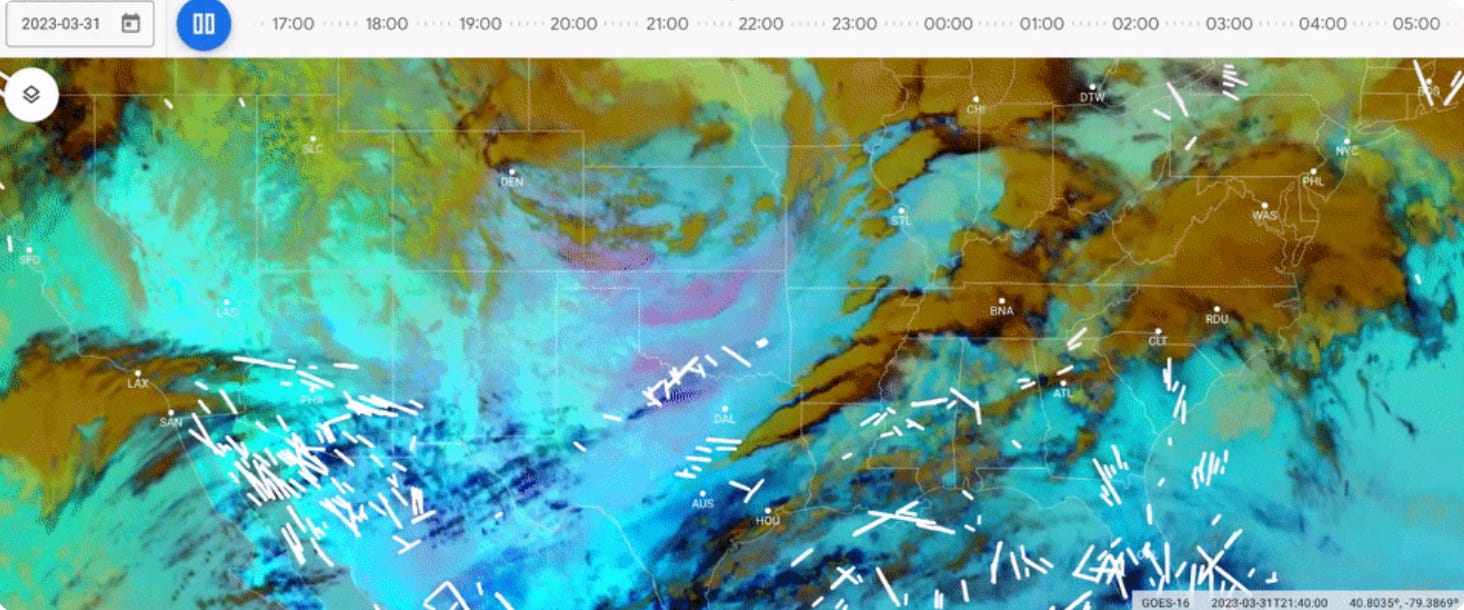
The Checklist is grounded on the recent and valuable realization in the world of aviation atmospheric science that “only 3% of global flights generate 80% of total contrail warming” (the big hitters). As this impact is so localized, fixing it doesn’t require grounded fleets or radical new technology. Instead, contrail avoidance offers a high-leverage opportunity for airlines to shrink their environmental footprint without breaking the bank, by addressing these big hitter flights.
This is backed by landmark simulations showing that targeting that small subset of high-impact flights can deliver massive climate benefits. For instance, a 2023 trial by American Airlines and Google managed to reduce detectable contrail formation by 54% with a meager 2% fuel penalty on the adjusted flights.
Now that the stage is set, let’s dive into the key pillars upon which this Checklist is built.
Pillar One: Climate Model Choice
Successful avoidance begins with accurate predictions, and accurate predictions begin with choosing the right climate model. Estuaire advises using the Contrail Cirrus Prediction Tool (CoCiP) in its pycontrails version, specifically when paired with advanced weather modeling such as that of the German Weather Service (DWD). Currently, this is the only operational weather forecast model that accounts for ice supersaturation by design. These tools are essential for identifying Ice-Supersaturated Regions (ISSRs) – the cold, humid patches of sky where persistent warming contrails love to form.
To stay on the right side of the law (and the European Commission), the Checklist recommends aligning these models with the EU’s Monitoring, Reporting, and Verification (MRV) scheme. This is particularly urgent because, as of January 1, 2025, the revised EU ETS Directive 2023/958 now mandates airlines report their non-CO2 impacts for all intra-European flights.
Pillar Two: Optimizing the Flight Trajectory
Once the no-fly cloud zones are mapped, the next step is trajectory optimization. Traditionally, flight dispatchers focus on wind, turbulence, and keeping costs low. Estuaire’s trick is just adding climate as another constraint in the calculation.
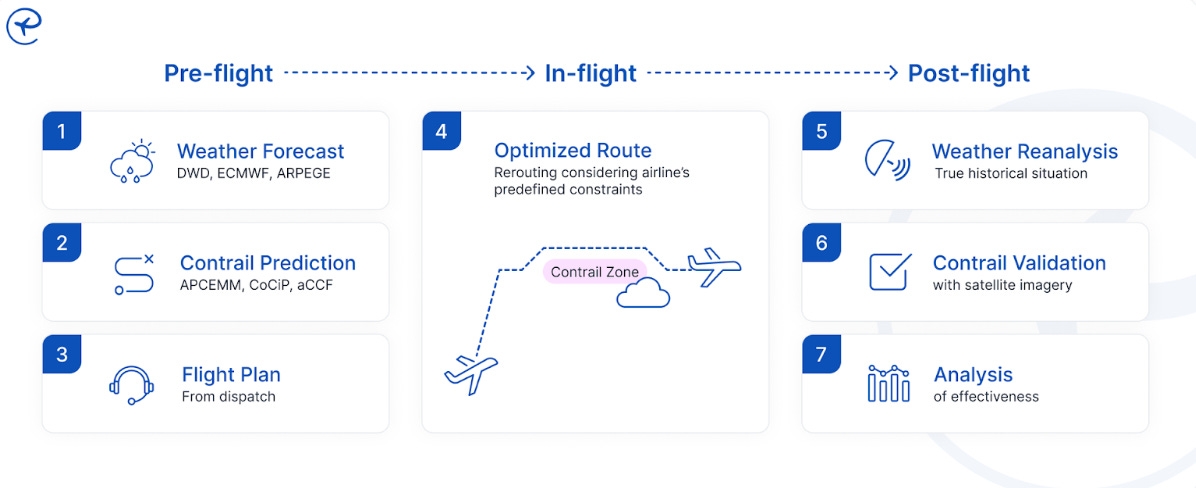
By integrating contrail warming impacts directly into the Cost Index (CI) of the original flight plan, airlines can perform a “precise tradeoff between fuel expense, time, and total climate impact.” This ensures the pilot isn’t just zig-zagging for the sake of it, but intentionally making economically and operationally sound moves.
Pillar Three: Implementation and Operational Guardrails
Lest anyone think contrail avoidance is a free-for-all, the Checklist emphasizes Operational Guardrails to keep things sane. Success hinges on a few firm rules:
Define a Radiative Forcing Index: Only reroute when the contrail-to-CO2 ratio is worth the effort.
Cap the Extras: Additional fuel burn and delays should be strictly limited – typically capped at under 2% extra fuel and less than 5 minutes of delay per flight.
Safety First: As the Checklist notes, “turbulence forecasts, fuel safety reserves, and passenger comfort take absolute priority over contrail avoidance rerouting.”
Operational Hurdles
Before an airline can start avoiding contrail-sensitive areas, they must overcome the real-world friction of daily operations. The first hurdle is a matter of choosing Pre-Tactical vs. Tactical maneuvers. Pre-tactical avoidance involves optimizing the flight plan before it’s even filed, which is the aviation equivalent of checking traffic before leaving the house. Tactical avoidance, however, is more like changing the GPS route while already cruising down the highway. It requires sending dynamic recommendations to pilots who are already airborne.
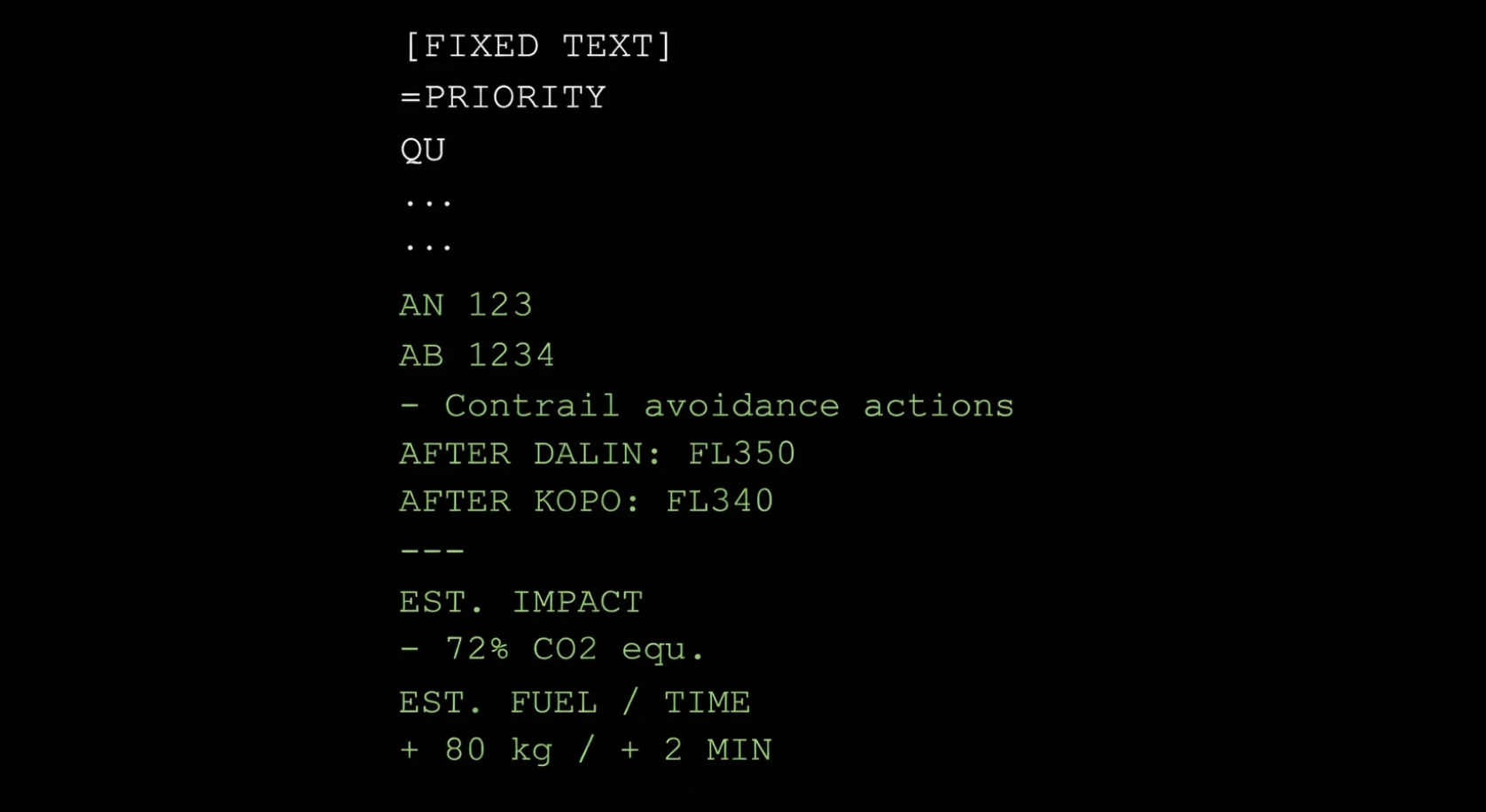
Practically speaking, this means ensuring tactical rerouting suggestions aren’t just vague ideas but are delivered via live messaging as specific waypoints which can be typed directly into the Flight Management Computer. This keeps the pilot workload manageable while ensuring the plane actually goes where the climate models say it should.
The second major hurdle involves the tricky business of Post-flight Verification. Verification can be physically limited in dense airspaces, meaning visual satellite confirmation is not possible for every single flight. Airlines must instead rely on a mix of flight data and weather reanalysis to prove their fancy flightwork actually reduced the climate impact of the flight.
Fortunately, Estuaire provides a calculation methodology to crunch the numbers and establish what that climate impact looks like after the flight. That, paired with their contrail detection algorithm for geostationary satellites, can bring theoretical data to the reality of contrail avoidance.
From Theory to Reality
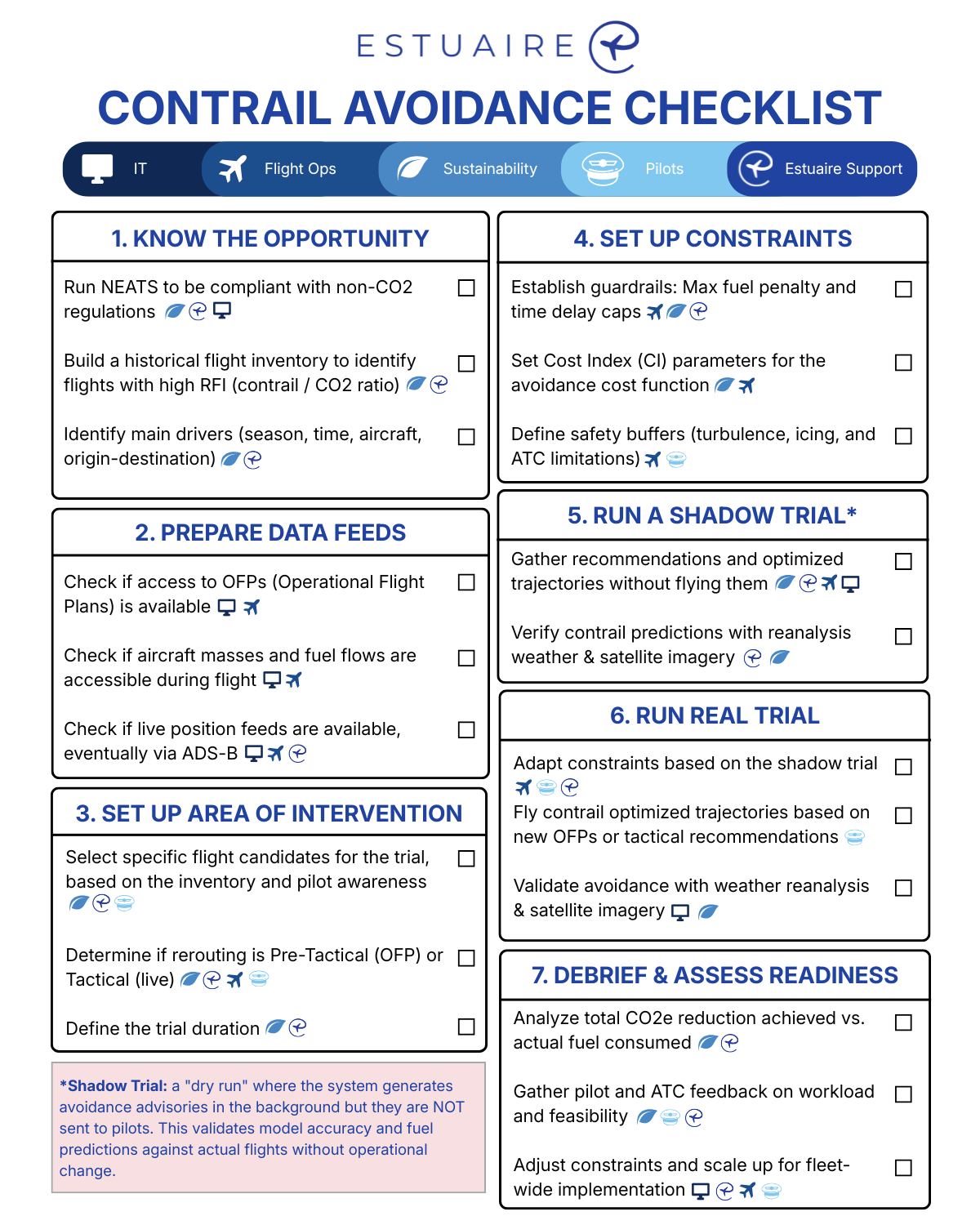
Now, to the Checklist itself – a systematic approach that doesn’t require an operations overhaul to implement.
Estuaire’s seven-step approach, starts with Knowing the Opportunity by building a historical inventory of high-impact flights. The process moves through Data Preparation, ensuring access to real-time aircraft mass and position feeds, then defining the Area of Intervention through the selection of flight candidates and Setting Up Constraints built on those important guardrails referenced above, before gathering and verifying recommendations and optimized trajectories with a Shadow Trail. Finally, they can Run a Real Trial to validate avoidance and Assess the Readiness and accuracy through post-flight analyses and pilot feedback.
The Debrief
After the plane has touched down, the loop closes with the previously illusive Post-flight Verification. Using Estuaire’s contrail detection algorithm for geostationary satellites like GOES and MTG, airlines can use thermal infrared bands to see if their avoidance maneuvers actually worked. They can then analyze that data and adjust constraints for future flights.
While some worry that this adds a burden to already thin margins, the Checklist argues “these concerns are valid but they are not prohibitive.” When treated as a structured operational capability rather than a side project, contrail avoidance transforms from a “perceived constraint into one of the most accessible and effective climate levers available to airlines today.”
Ultimately, the Contrail Avoidance Checklist serves as a bridge between pilots, dispatchers, IT managers, and sustainability teams, ensuring that every maneuver is as actionable and trusted as a standard weather update. By embedding these high-leverage strategies into the daily flow, airlines can turn what once looked like a complex operational puzzle into a predictable, effective routine. So routine, that contrail-conscious flying will become just another part of a successful flight.